Highllights
- There are three different types of attention deficit hyperactivity disorder (ADHD): combined, predominantly inattentive, and predominantly hyperactive-impulsive.
- Most of the time, the least common type of ADHD in adults is predominantly hyperactive-impulsive ADHD.
- Adults with ADHD tend to have less obvious hyperactive-impulsive symptoms than kids with ADHD.
When you think of an adult with ADHD, you probably think of someone who has trouble paying attention and focusing. Their desk may be a mess, they forget things, are always late, or rarely meet deadlines.
On the other hand, the younger kids you’ve seen with ADHD often seem too active. It looks like they are getting into trouble because they are screaming, climbing on furniture, and writing on walls.
You might be surprised to learn that adults can have ADHD hyperactivity symptoms, though they show up in different ways.
Let’s talk in more depth about the signs, diagnosis, and treatment of hyperactive-impulsive ADHD.
[info_cards]
What is Hyperactive-Impulsive ADHD?
Attention-deficit hyperactivity disorder (ADHD) is a frequently diagnosed mental health disorder globally. The designation indicates two primary symptom categories: diminished attention and elevated energy (hyperactivity). However, there are also indicators of diminished impulse control (impulsivity).
In ADHD, hyperactivity and impulsivity are intrinsically linked. In 2013, the diagnosis transitioned from a singular classification to the acknowledgment of three distinct subtypes.
- Primarily inattentive subtype
-
Primarily hyperactive-impulsive subtype
-
Consolidated (integration of the aforementioned)
Hyperactive-impulsive ADHD (ADHD-HI) is diagnosed when individuals exhibit elevated energy levels and diminished impulse control, resulting in greater life disruption than inattentiveness.
Next, we will examine the reasons for the development of ADHD, which are consistent across both inattentive and hyperactive-impulsive subtypes.
Hyperactive-Impulsive ADHD: Its Causes and Risk Factors
ADHD is a neurodevelopmental disorder that typically begins in early childhood. These conditions occur when a trigger influences brain development and function, thereby affecting learning, communication, behavior, and motor skills. Autism spectrum disorder (ASD) and certain learning disabilities are other examples.
So what are the things that set them off? Most of the time, they are either genetic or not (environmental factors).
- DNA is very important because ADHD is very genetic and often runs in families.
-
Things in a person’s environment that trigger their brain can occur before or after birth. Some examples are:
Using drugs, alcohol, or cigarettes while pregnant.
-
Low weight at birth.
-
Born too soon.
-
Being around chemicals, heavy metals such as lead and mercury, or pesticides.
-
Long-term problems with getting good sleep.
-
Brain injury from trauma.
-
Stroke.
You may have heard that bad parenting, too much screen time, not enough micronutrients, or too much sugar can cause ADHD, but these are probably not true because there is no clear proof.
It is widely believed that 3 to 6% of adults have ADHD, but a new article says that 14.6% of US adults may meet the criteria for ADHD. If you’re reading this and think you might have ADHD, you’re not alone, and it’s not your fault.
Next, we’ll talk about how doctors figure out what’s wrong.
How Hyperactive-Impulsive ADHD Is Diagnosed
Medical professionals rely on the DSM-5 (Diagnostic and Statistical Manual of Mental Disorders, Fifth Edition) to identify the predominantly hyperactive-impulsive presentation of ADHD.
What clinicians usually assess in adults includes:
- At least five symptoms from the following behaviors:
- Frequent fidgeting, such as tapping objects, moving hands or feet, or shifting in a chair.
- Difficulty remaining seated for long periods, including during meals, meetings, or social gatherings.
- A constant sense of inner restlessness and trouble feeling calm or relaxed.
- Speaking loudly or appearing overly energetic compared to others.
- Acting as if always in motion, as though driven by nonstop activity.
- Talking excessively, even when it may not be appropriate.
- Interrupting others or answering before a conversation partner has finished speaking.
- Becoming highly impatient when waiting in traffic, lines, or slow-moving situations.
- Intruding into other people’s activities, taking over tasks, or using things without asking.
- Symptoms must have started before age 12.
- Signs must appear in more than one setting.
For example, the behaviors may be noticeable both at home and at work.
- Symptoms must significantly interfere with daily life.
They may affect relationships, job performance, or overall functioning.
- The symptoms cannot be explained by another mental health condition.
A proper evaluation ensures the behaviors are not caused by anxiety, mood disorders, or other diagnoses.
The hyperactive-impulsive presentation represents around 6–8% of ADHD cases in children. Since hyperactivity often becomes less visible with age, this form is much less commonly diagnosed in adults.
Inattentive ADHD Subtype versus Hyperactive-Impulsive ADHD Subtype
Someone who mostly has inattentive symptoms may have trouble concentrating, focusing, and staying on task. They might also forget things, lose things frequently, and struggle to manage their time well, which means they are often late for appointments and miss deadlines.
If you notice that you are inattentive and hyperactive-impulsive, you may have combined ADHD. Why not take this free, 5-minute screening test to get a better look at your symptoms?
How It Feels to Have Hyperactive-Impulsive ADHD
If you ask someone with hyperactive-impulsive ADHD how they feel, they might say one of the following things. Let’s see if any of these sound familiar to you.
Symptoms that the person with ADHD is feeling inside but not physically:
- “My mind is always racing, going from one thought to the next.”
-
“I hate waiting in line; I’d rather leave or push in than wait my turn.”
-
“It seems like there’s always something to do.”
-
“I can’t sit still for long because I feel stuck and uncomfortable.”
-
“I can’t relax because my mind and body are always on edge.”
-
“I feel like I’m always working too hard, but I can’t stop.”
-
“I feel like I’m going crazy; I do things I never do, like spending all my money or drinking too much.”
-
“I’m always disappointed in myself because I make decisions that I regret; I have no self-control, like when I quit my job or when I cheated on my partner.”
People with ADHD can see and feel the physical signs of hyperactivity:
- “People think I’m rude when I take over tasks or use things without asking, but it’s because I feel like I need to get things done.”
-
“People miss half of what I’m saying because I talk so fast.”
-
“I can’t deal with traffic and drive like I’m in a hurry, even when I don’t need to.” That’s probably why people don’t want to ride with me; I’ve had accidents.
-
“I fidget all the time without even realizing it. I tap my fingers, bounce my knee, click pens, rock back and forth in chairs, pick at my skin, and pull at my hair. It bothers the people around me.”
-
“I tend to be louder than the people around me, even when I don’t mean to be. Sometimes I’m the life of the party, and sometimes it’s not right and makes people mad.”
-
“I feel like I need to talk, so I cut people off and even finish their sentences.”
-
“I can’t stand incompetence, and I’ll make a scene to make a point; this makes my family look bad.”
-
“Sometimes I feel like I can’t control my feelings, and I’ll just say something without thinking, so people are always talking about how my mood changes.”
How Hyperactive-Impulsive ADHD Affects Everyday Life
People with ADHD who are hyperactive or impulsive can have physical or behavioral symptoms that make everyday life very difficult. These symptoms can affect relationships with coworkers and family members. They might also affect the quality of work, self-esteem, and even mental and physical health.
Even though the person with ADHD has little control over the situation, their coworkers, family, and friends may get angry with them for acting inappropriately, loudly, or in ways that put them at risk.
This lowers the self-esteem of the person with ADHD-HI, which can lead to them developing other mental health problems like depression, anxiety, or both.
Treatment for ADHD with hyperactivity and impulsivity
The good news is that you can manage ADHD-HI with a mix of self-help techniques and a treatment plan made just for you by a mental health professional. Here are some tips you can use at home and at work.
Ways to deal with problems and help yourself
- Use fidget toys, stress balls, or gum to satisfy your need to move in less obvious ways.
-
Lower stress and anxiety: When you feel stressed, your body releases more adrenaline, which can make you more hyper and impulsive. So, do some deep-breathing exercises and mindfulness practices to calm down. Mindfulness means being aware of your feelings without judging them.
-
Stay active: Exercise will not only help you feel less anxious, but it will also satisfy your need to move.
-
Get more sleep: Good sleep can help with ADHD symptoms.
-
Have someone check on your behavior: If you’re being loud, bothering people, or acting rudely, they can quietly pull you aside and let you know.
-
Stay away from traffic and long lines: Schedule your appointments and go to the bank or a meeting when it’s less busy.
Medication
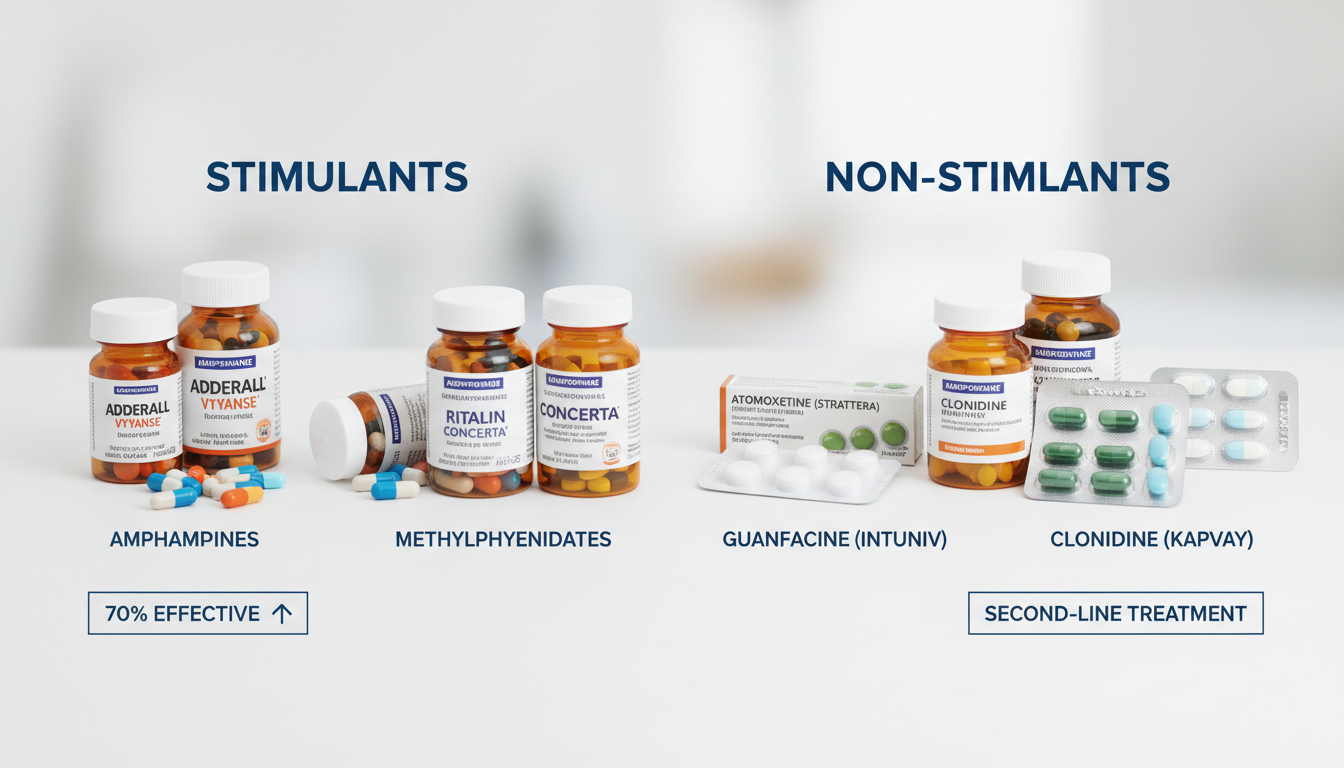
The main part of treating ADHD is medication, which comes in two types: stimulants and non-stimulants. Amphetamines and methylphenidates are the best choice because they work for more than 70% of people.
When patients can’t take stimulants because of side effects or other health problems, doctors use non-stimulant medication as a second-line treatment.
Therapy
Psychotherapy uses different methods to help people with ADHD who are mostly hyperactive and impulsive deal with sudden, bad decisions, restlessness, mood swings, and behavior that isn’t appropriate in social situations.
Cognitive-behavioral therapy (CBT) helps people change their negative thoughts and feelings into more positive ones. Self-control strategies are another type of CBT technique.
Family and marital therapy helps adults with ADHD get back in touch with people they care about. The person with ADHD can learn how their actions affect other people, and family members can learn how to deal with the symptoms of ADHD.
In Conclusion
Adults with pure hyperactive-impulsive ADHD are rare, but it does happen. The symptoms are less obvious than they are in kids. It’s important to note that hyperactive-impulsive symptoms are also present in the most common type of ADHD, which is called combined ADHD.
If you think you might have hyperactive-impulsive ADHD as an adult, book an online appointment with Mental Root today. This is the first step toward getting an accurate diagnosis and a treatment plan that works for you.


 9 min read