


Evidence Based


Updated on: 07.08.2025
 10 min read
 Medical Disclaimer
The medicines listed on this website are provided for informational purposes only. Just because they are on the list doesn’t mean that anyone will be prescribed them; in the end, treatment decisions are up to the healthcare providers. This is not a complete list of all the medicines that can be prescribed. Depending on the patient’s specific health needs and circumstances, doctors may prescribe other medicines, even those that don’t contain stimulants.
 Important Safety Warning: Antidepressants and Benzodiazepines
Antidepressants may make you more likely to think about or act on suicidal thoughts, and benzodiazepines can make you addicted and dependent. Some drugs that help with anxiety are illegal. Talk to your doctor and make sure you keep getting checkups while you’re getting treatment.
 Highlights
The four most common drugs that doctors give to people with anxiety are serotonin-norepinephrine reuptake inhibitors (SNRIs), selective serotonin reuptake inhibitors (SSRIs), beta-blockers, and benzodiazepines.
SSRIs are a common first-line drug that has fewer side effects than other drugs.
If a person’s anxiety disorder symptoms are severe, making it challenging for them to do everyday things, or if therapy alone isn’t working, medication is suggested.
Some anxiety medications need to be taken every day, while others only need to be taken for a short time or when necessary, like when someone has a panic attack.
You were recently diagnosed with stress and anxiety. In some ways, the news is a relief, but it’s also overwhelming; you want to learn more about managing your anxiety disorder and whether you should take anxiety medication.
You’ve conducted a quick Google search, and the number of anxiety medication names is staggering. Although the only way to get anxiety medication is through your healthcare provider, they will ultimately decide what to take for anxiety, knowing your options before the appointment will allow you to have a more informed discussion.
Talk to a Licensed Provider About Your Anxiety Treatment Options
Get a professional assessment and personalized care plan tailored to your needs.
Get Started
Anxiety disorders are among the most prevalent mental health issues worldwide. While occasional anxiety is normal, persistent and overwhelming worry can disrupt daily life and necessitate appropriate treatment.
The Anxiety and Depression Association of America recommends medication for situations such as the following:
Anxiety does not only affect your thoughts; it can also cause physical symptoms such as the following.
Millions of people worldwide suffer from anxiety disorders, with women affected nearly twice as often as men.
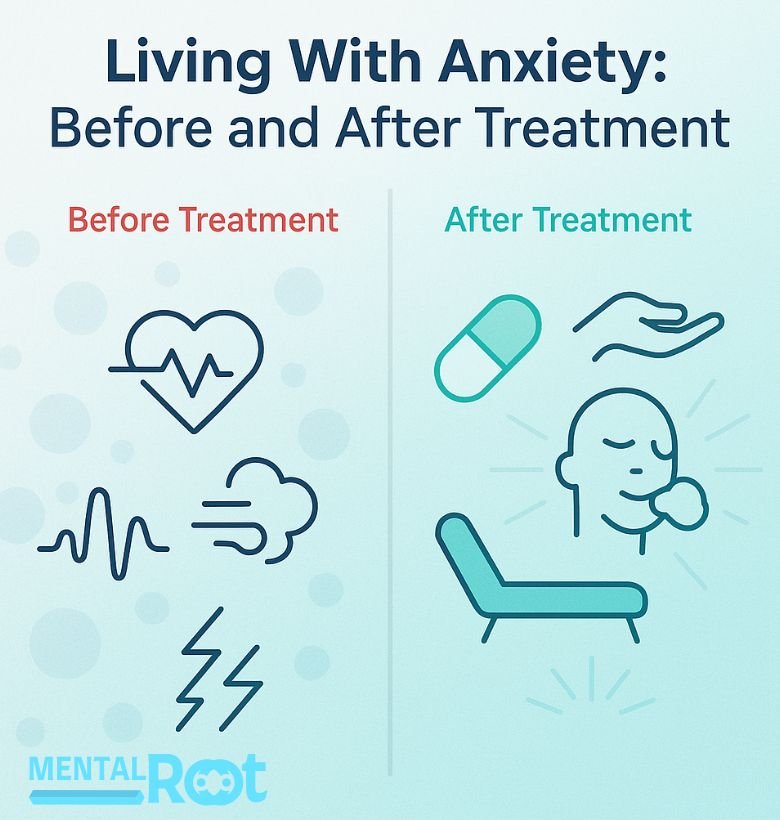
The American Psychiatric Association recognizes several anxiety disorders, including:
Understanding your specific condition is critical because treatment options vary.
Anxiety medications, also known as anxiolytics or anti-anxiety drugs, work differently based on their type.
In simpler terms:
They can either relax the brain, balance mood chemicals, or regulate physical stress responses.
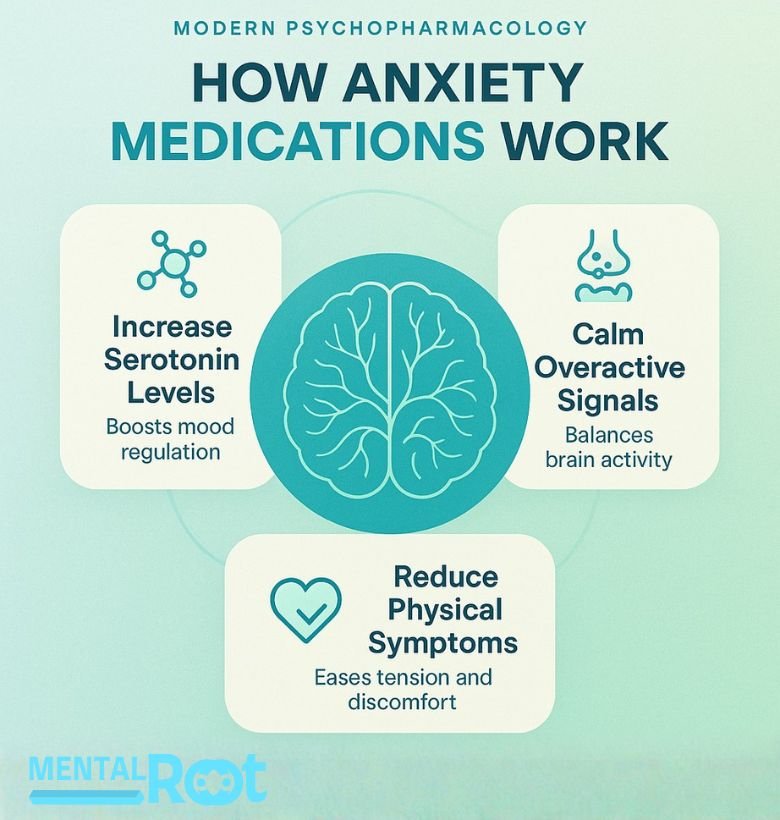
No single solution is universally applicable. Doctors select medications based on your symptoms, medical history, and treatment goals.
Antidepressants are the first-line treatment for most anxiety disorders because they address underlying chemical imbalances in the brain rather than simply masking symptoms.
SSRIs are the most frequently prescribed medications for anxiety.
They raise serotonin levels in the brain, thereby regulating mood and reducing anxiety.
These medications affect both serotonin and norepinephrine.
Older medications are used when more recent treatments fail.
Due to strict dietary restrictions and potential interactions, MAOIs are no longer commonly used.
Atypical antidepressants are a wide range of medications that do not fall into traditional categories such as SSRIs or SNRIs but can still help with anxiety. They operate via various mechanisms in the brain, frequently targeting multiple neurotransmitters. These medications are frequently used when first-line treatments are ineffective or when additional benefits—such as improved sleep or appetite—are required.
Trazodone
Mirtazapine
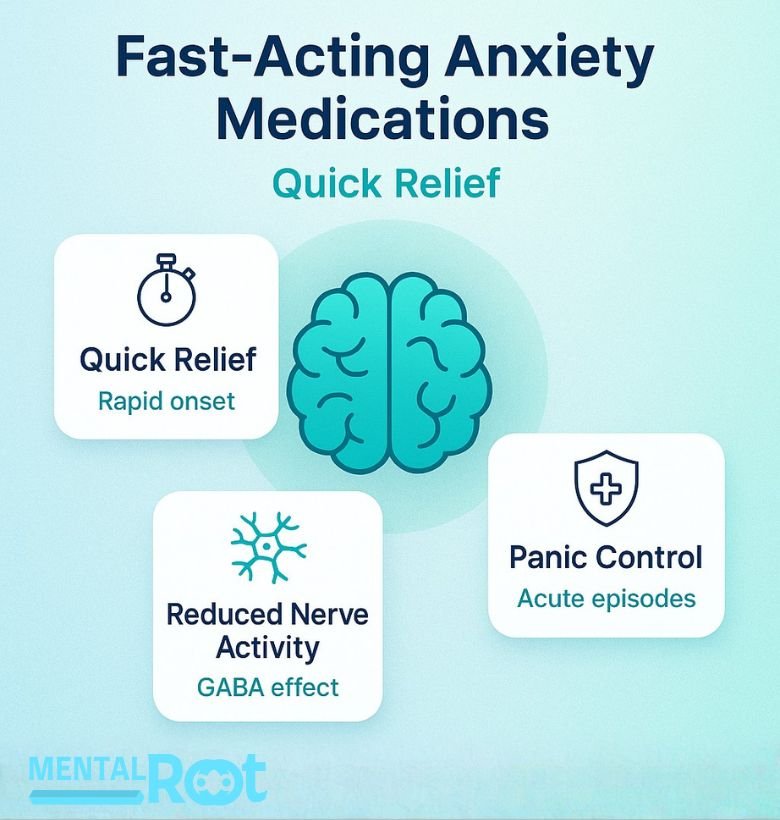
Anxiolytics are medications that provide quick relief from anxiety symptoms, making them useful for acute stress or panic attacks. They work by calming brain activity and reducing overactive nerve signals, allowing you to feel more relaxed quickly. Because prolonged use increases the risk of dependence, these medications are typically prescribed for short-term or as-needed use.
These are fast-acting medications used to provide temporary relief.
It is best suited for short-term use.
Buspirone is a non-addictive anti-anxiety medication that is widely used for long-term treatment, particularly in generalized anxiety disorder (GAD). It works by affecting serotonin receptors, which help to stabilize mood without causing excessive sedation. Unlike benzodiazepines, it does not provide immediate relief and typically takes 2–4 weeks to produce noticeable results.
Beta-blockers are medications that help control anxiety symptoms like rapid heartbeat, shaking, and sweating. They work by inhibiting the effects of stress hormones such as adrenaline, making them particularly effective for performance or situational anxiety (for example, public speaking). While they do not directly alleviate emotional anxiety, they can make symptoms seem more manageable in the moment.
They relieve physical symptoms such as
In addition to standard treatments, certain medications are used to treat specific anxiety symptoms or situations. Antihistamines such as hydroxyzine provide quick relief, anticonvulsants such as gabapentin treat specific types of anxiety, and beta-blockers control physical symptoms such as rapid heartbeat. While not always the first choice, they can be beneficial when tailored to specific needs.
Although gabapentin is not officially approved for anxiety, it is occasionally used for:
Consult a Licensed Medical Provider for Personalized Anxiety Treatment
Book an appointmentHere are some widely used medications that doctors prescribe:
|
Medication |
Class |
Common Use |
|---|---|---|
|
Alprazolam |
Benzodiazepine |
Panic & GAD |
|
Sertraline |
SSRI |
Anxiety & depression |
|
Escitalopram |
SSRI |
GAD |
|
Propranolol |
Beta-blocker |
Physical symptoms |
|
Buspirone |
Anxiolytic |
GAD |
|
Hydroxyzine |
Antihistamine |
Short-term anxiety |
Your healthcare provider considers several factors:
This assessment provides a safe and personalized treatment plan.
You might benefit from medication if:
The best course of action is to consult a licensed medical professional for a proper evaluation and treatment plan.
Anxiety treatment is highly individualized. While medications can be extremely effective, they work best in conjunction with lifestyle changes and therapy.
If you are struggling, do not ignore it; help is available, and recovery is possible.
The effects of anxiety drugs depend on the kind that was prescribed. Over the course of a few weeks, some medications, like SNRIs and SSRIs (selective serotonin reuptake inhibitors), make people feel less anxious. Some medicines, like benzodiazepines, can help you feel better faster, within minutes or hours. Most people feel less stressed, calmer, and able to do things better in their daily lives over time.
Yes, taking medicine for anxiety can help lower your fear and physical symptoms like a fast heartbeat or tension. However, it doesn’t get rid of the things that make you afraid in the first place, like traumatic events or stressful situations, so you may still need therapy to deal with them effectively. A lot of the time, therapy is suggested along with medication to deal with these triggers and improve long-term outcomes. This is because therapy teaches people how to deal with anxiety and can help their symptoms get better over time.
Medication for anxiety helps control and lessen symptoms, especially when they are very bad. However, it might not get rid of anxiety by itself. People think that the best way to get long-term relief is to combine medication with therapy, like cognitive behavioral therapy (CBT).
For starters, SSRIs and SNRIs (serotonin-norepinephrine reuptake inhibitors) are often suggested as effective treatments. They’re usually well tolerated and don’t have as many side effects as other options. Each person needs a different medication, so it’s important to talk to a doctor or nurse.
Benzodiazepines or beta-blockers may be given by doctors to help with short-term anxiety or panic attacks. Because your symptoms, medical history, and risk factors determine the best course of action, treatment should always be tailored to you.
Yes, some medications for anxiety can be taken only when needed, especially for short-term symptoms or certain situations. But for people with long-term or persistent anxiety, taking daily medications like SSRIs or SNRIs is usually the best way to keep their symptoms under control.
The most common way to use SSRIs and SNRIs is for long-term treatment. They help people who have long-term anxiety and are generally thought to be safe when used under medical supervision.
Yes, taking medicine for anxiety can help you stop overthinking by lowering your overall anxiety. Therapy is an important part of a full treatment plan because it helps deal with thought patterns and triggers.
Depending on the type of medicine and the person, anti-anxiety drugs can have different benefits. In general, anxiety drugs help lessen panic episodes, undue worry, and nervousness. These medicines might make it easier to handle daily tasks, cool and relax you, and lessen the strength of your nervous thoughts.