


Evidence Based


Updated on: 06.08.2025
 7 min read
Medication is one way to address physical issues and the symptoms they cause. However, behavioral and psychological therapies may also be necessary for mental health issues like ADHD. Cognitive behavioral therapy, sometimes known as CBT, is one treatment for this illness.
Medication is one way to address physical issues and the symptoms they cause. However, behavioral and psychological therapies may also be necessary for mental health issues like ADHD. Cognitive behavioral therapy, sometimes known as CBT, is one treatment for this illness.
CBT aims to educate people on how to challenge harmful thinking patterns and enhance certain life skills. Additionally, it helps patients develop new behavioral patterns that provide them stability and order in their lives.
Choose the best ADHD therapy for you connect with licensed mental health experts online today.
Start your therapy journeyCBT for ADHD has been shown to be effective, as individuals with the disorder often struggle with problems including low self-esteem, negative thinking, poor organizational skills, and emotional difficulties. Find out more about this kind of treatment and how it benefits people with ADHD. Go on reading!

Self-control and emotional regulation issues may negatively affect an ADHD person’s ability to manage their time, plan both short- and long-term, be organized, maintain emotional stability, and be motivated. Throughout their everyday lives, these issues lead to recurring failures, such as missed deadlines, disorganization in personal and professional tasks, and difficulties in maintaining relationships. The good news is that CBT may help those who experience these kinds of symptoms. Whether the issue is trouble concentrating at work, a behavioral problem, or getting out the door in the morning, it may provide strategies that lead to long-lasting transformation.
Moreover, it is often recognized that compared to adults in the general community, people with ADHD are more likely to co-occur with anxiety and depressive disorders. Therefore, many people with ADHD may benefit from CBT-based therapies for these co-occurring diseases.
Cognitive-behavioral therapy utilizes a diverse array of techniques and procedures, tailored to meet the patient’s specific needs. As new issues emerge, one of CBT’s main goals is to assist the patient in learning how to use these techniques.
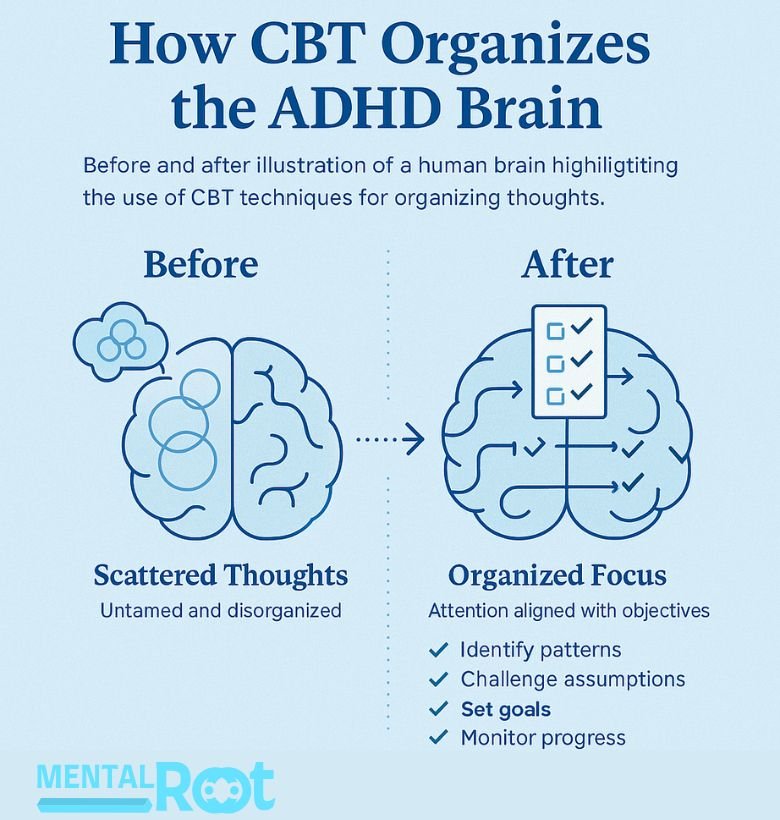
The following are some methods that are often used to treat symptoms of ADHD.
1. Cognitive Restructuring
To address negative thinking patterns, cognitive restructuring involves recognizing erroneous ideas and replacing them with reasonable ones. It may not seem like a crucial component of an ADHD treatment plan, but patients who also have co-occurring diagnoses of anxiety, depression, or low self-esteem would benefit from this approach. Cognitive restructuring helps people retrain themselves to see themselves and their environment more positively and constructively.
2. Scheduling Activities
Assignments and activity planning are difficult for those with ADHD. By using the behavioral aspect of CBT, you may learn to prioritize your responsibilities and strengthen your organization skills. Your CBT therapist guides you through each method so you can apply and keep those abilities:
3. Behavior Modification
Behavior modification, which is helpful for ADHD patients, is the act of changing one’s mental or physical response to a stimulus. A variety of strategies and tactics change the unwanted behaviors into more suitable ones. The following techniques are often used:
Discover how CBT can help you regain control of your life—connect with certified professionals for expert support.
Get Support4. Distractibility Delay
The propensity of individuals with ADHD to rapidly lose focus hinders their ability to do tasks efficiently. The distractibility delay approach advises individuals to document any possible distractions, allowing them to temporarily set them aside until they have completed their present task.
Once you have acquired distraction-busting skills, your therapist may assign you homework to practice them on a weekly basis until they become ingrained habits. In addition, your therapist may provide guidance on creating a work environment that is free from distractions, setting a schedule for frequent breaks, and using an alarm or similar reminder to periodically assess your progress and ensure that you remain focused on your tasks.
5. ADHD Worksheets
There are several cognitive-behavioral therapy worksheets available that may be beneficial, whether the therapist is seeking methods to guide the patient throughout treatment or if the client prefers a hands-on approach to learning. Worksheets are available in several formats based on the specific requirements of the patient, such as
A licensed therapist is best qualified to assess your needs and create a suitable treatment plan.
Chat with a therapist6. CBT Exercises for ADHD
To effectively address your ADHD symptoms, it is advisable to include several cognitive behavioral therapy (CBT) exercises in your daily routines. While it is recommended to seek guidance from a qualified therapist for any problems with your overall well-being, you may also use these direct approaches independently.
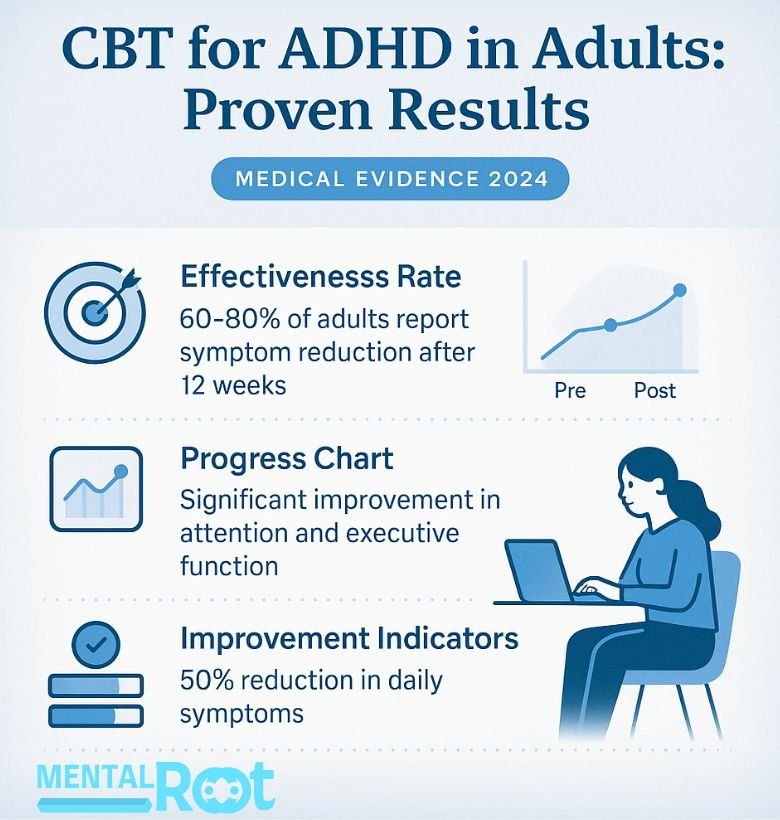
Cognitive behavioral therapy (CBT) for attention-deficit/hyperactivity disorder (ADHD) is effective depending on the individual patient and their range of symptoms. The time it takes to see outcomes may vary depending on the presence of other mental health conditions or previous traumatic experiences. To promptly see any alterations, it is crucial to approach the session with a receptive mindset and diligently fulfill the assignments given by your therapist.
Multiple studies have shown the efficacy of cognitive behavioral therapy (CBT) in the treatment of attention deficit hyperactivity disorder (ADHD). For example, a 2018 review examined 14 studies of poor to moderate quality that investigated the potential benefits of cognitive behavioral therapy (CBT) as a therapy for ADHD. The reviewers said that cognitive behavioral therapy (CBT) seems to have a positive effect in reducing impulsivity, hyperactivity, and inattentiveness. Furthermore, it was shown that the combination of cognitive behavioral therapy (CBT) and medication had greater efficacy in alleviating feelings of anxiety and depression, as well as improving overall daily functioning, compared to utilizing medication alone.
Selecting the optimal therapist might be a formidable task. Inquire about the provider’s knowledge and proficiency in Cognitive Behavioral Therapy (CBT) for attention-deficit/hyperactivity disorder (ADHD). An excellent choice for contacting professionals in cognitive behavioral therapy (CBT) is by using the services of an online clinic.