A team of experts wrote and checked the facts in this article, which is based on scientific evidence. Our experts work hard to be fair, objective, and honest, and they present both sides of the issue.
Evidence Based
ADHD Impulsivity: Causes, Symptoms, and Proven Ways to Manage It
ADHD impulsivity is a primary symptom associated with variations in brain function.
It can have an effect on work, relationships, and mental health.
The best results come from treatment and practical strategies.
Small things like taking a break and being mindful can have a big impact.
One of the hardest things about attention-deficit hyperactivity disorder (ADHD) is being impulsive. It can effect your safety, relationships, money, and job. But the good news is If you know how to deal with it, you can control your impulsivity.
This guide will explain what ADHD impulsivity is, why it happens, and how to deal with it in real life.
What Is ADHD Impulsivity?
Thinking you may have ADHD?
Have a mental health assessment online in 24 hours.
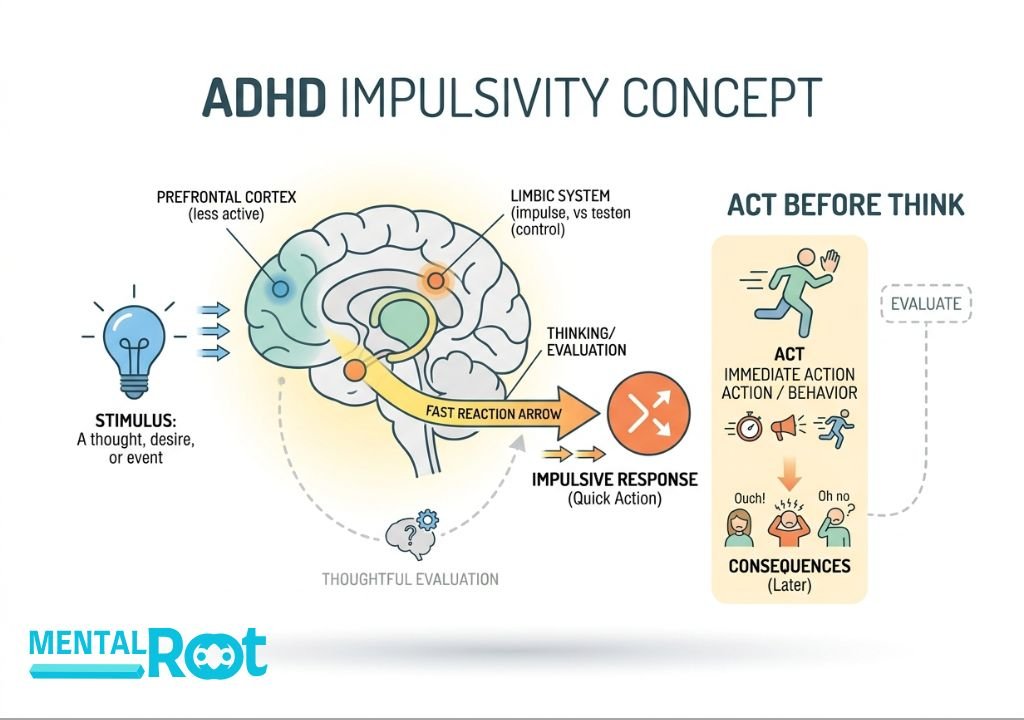
Impulsivity in ADHD means doing things without thinking about what will happen next. It seems like your brain can’t “pause” before it reacts.
You might:
Speak before thinking
Make quick decisions you later regret.
Struggle to resist urges (shopping, eating, quitting, etc.)
ADHD-related impulsivity is different from the typical impulsive moments that everyone has. It happens more often, is stronger, and harder to control.
Why Does ADHD Cause Impulsivity?
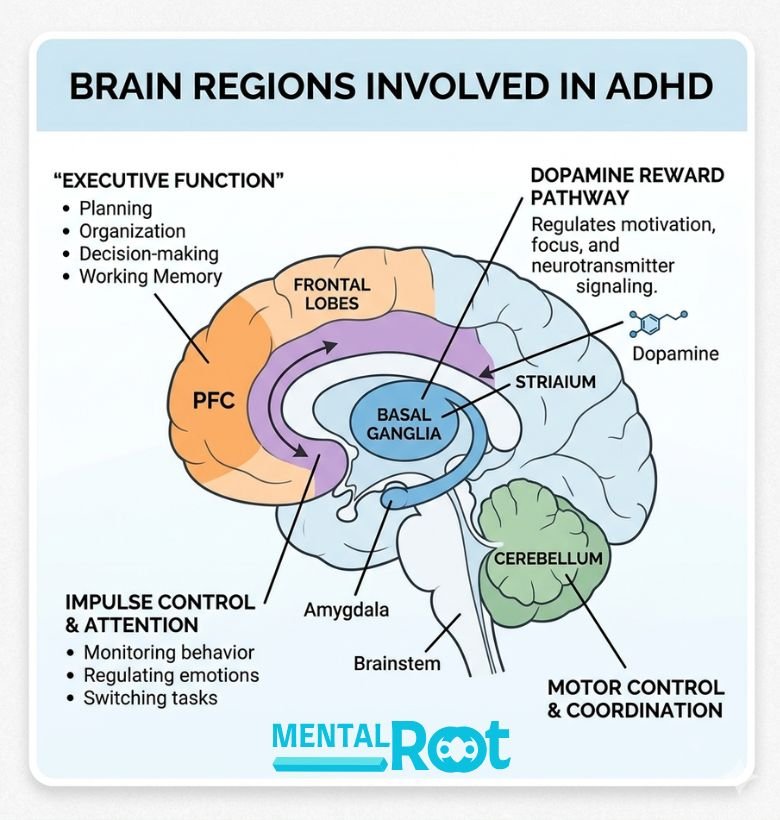
ADHD impulsivity is connected to how the brain makes decisions, feels things, and receives rewards.
Key Brain Factors Behind Impulsivity
1. Executive Function Challenges
Executive functions help you:
Plan ahead
Control behavior
Make thoughtful decisions
People with ADHD have weaker versions of these functions, which makes it harder for them to stop and think before they act, leading to impulsive behaviors and difficulties in regulating their actions in various situations.
2. Brain Signaling Differences
Some brain areas, like those that aid in decision-making and emotion regulation, don’t communicate well. This makes it easier for impulses to “slip through.”
3. Dopamine Imbalance
People with ADHD often have lower levels of dopamine, which:
Increases the need for instant rewards
Makes delayed gratification difficult
Encourages impulsive choices for quick satisfaction
Common Symptoms of ADHD Impulsivity
ADHD impulsivity can show up in many parts of life:
Behavioral Symptoms
Breaking up conversations
Saying answers out loud
Hard time waiting your turn
Emotional Symptoms
Sudden fits of rage or emotion
Things you wish you hadn’t said
Getting into or ending relationships too quickly
Lifestyle & Decision-Making
Buying or spending money without thinking
Behaviors that are dangerous (like speeding or making bad choices)
Making big choices or quitting jobs all of a sudden
How Impulsivity Impacts Daily Life
1. Relationships
Misunderstandings that happen when you interrupt or get angry
Things that hurt people said without thinking
2. Work and Career
Having trouble following directions
Failing to put tasks in the right order
Impulsive job changes
3. Health and Safety
Risk-taking behaviors
Poor sleep or eating habits
4. Mental Health
Feeling bad and guilty after doing something on a whim
More anxiety or depression
When Should You Seek Help?
You should think about getting a professional evaluation if you are impulsive.
Happens frequently
Causes financial, emotional, or social problems
Leads to risky or harmful behaviors
Who Can Help?
Psychologists
Psychiatrists
Licensed therapists
Physicians
Obtaining an accurate diagnosis is crucial, as other conditions, such as mood disorders, can also lead to impulsive behavior.
Treatments that work for ADHD impulsivity
Even though ADHD can’t be “cured,” it can be well managed.
1. Medication
Helps keep brain chemicals in balance
Helps you focus and control your impulses
Offers both stimulant and non-stimulant choices
2. Therapy & Coaching
CBT stands for cognitive behavioral therapy.
ADHD coaching for daily tasks
3. Exercise
Helps the brain work better
Cuts down on impulsive behavior
4. Skill Development
Helps you control your impulses in the long term
Works best when used with professional treatment
Practical Strategies to Control Impulsivity
Quick Techniques You Can Start Today
1. Identify Your Triggers
Note patterns, like how being bored leads to shopping.
Avoid or get ready for situations with a lot of risk.
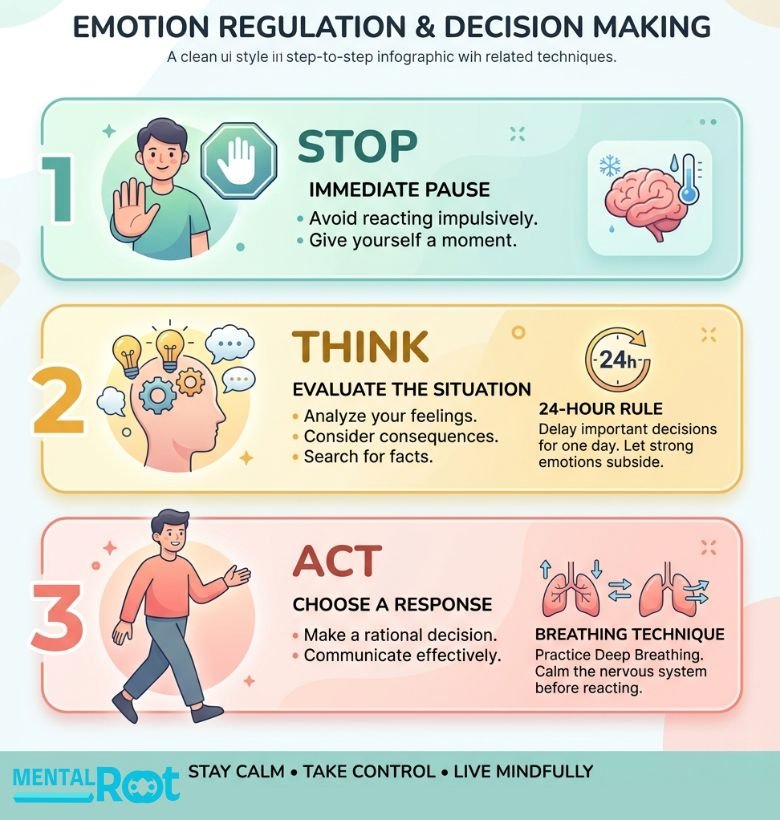
2. Use the “Stop–Think–Act” Method
Wait before you act.
Think about the results
Pick a better answer.
3. Follow the 24-Hour Rule
Put off making big choices (like buying something or quitting your job).
Gives your mind time to think straight
4. Practice Mindfulness
Stay in the present moment.
Lessens automatic responses
5. Controlled Breathing
Take four deep breaths in.
Let out your breath for six seconds.
It helps control strong urges.+
How to Control ADHD Impulsivity
To manage ADHD impulsivity effectively:
Find your triggers and stay away from high-risk situations
Before you decide what to do, “Stop—Think—Act.”
Before making a big choice, wait 24 hours.
Make breathing and being mindful habits.
Get help from a professional (therapy or medicine).
FAQ
What causes impulsivity in ADHD?
Impulsivity in ADHD arises from variations in brain function, especially in regions governing decision-making, emotional regulation, and dopamine control.
Is impulsivity the same as lack of discipline?
No, ADHD impulsivity is not a flaw in character; it is a neurological condition. It has to do with how the brain handles rewards and impulses.
Can ADHD impulsivity be controlled without medication?
Yes, through therapy, mindfulness, and behavioral techniques. However, using these with medicine often works best.
Why do people with ADHD struggle with delayed gratification?
When dopamine levels are low, short-term rewards look better, which makes it harder to wait for long-term benefits.
What is the fastest way to stop impulsive behavior?
You can quickly stop yourself from acting on impulse by using techniques like “Stop–Think–Act” and controlled breathing.
Does impulsivity get worse with age?
It can get better with treatment and awareness, but adults with ADHD may still act on impulse, particularly when faced with immediate rewards that overshadow the benefits of waiting for long-term outcomes.




 5 min read
 Highlights