

Evidence Based


Updated on: 02.08.2025
 6 min read
 Medical Disclaimer
The medicines listed on this website are provided for informational purposes only. Just because they are on the list doesn’t mean that anyone will be prescribed them; in the end, treatment decisions are up to the healthcare providers. This is not a complete list of all the medicines that can be prescribed. Depending on the patient’s specific health needs and circumstances, doctors may prescribe other medicines, even those that don’t contain stimulants.
ADHD often manifests in childhood and adolescence . If left unrecognized and untreated, symptoms may persist into adulthood.
While adult patients may seek psychotherapy or behavior training to address the problem, medicines remain the primary therapeutic option. In this essay, we will learn more about the ADHD medicine Dexedrine, which is one of the most regularly recommended treatments in such instances. The next sections will go into its applications, side effects, and doses.
Dexedrine is an ADHD medicine that improves patients’ attention and concentration while lowering impulsivity and hyperactivity. It may help patients improve their listening skills and task organization while also making them feel happier and more active.
It operates similarly to other stimulant drugs, boosting neurotransmitters in the brain (dopamine and norepinephrine) and working on the central nervous system. It usually takes effect between 30 and 60 minutes.
Dexedrine is offered as short-acting pills. and extended-release capsules (Dexedrine Spansule). It is important to note that in both circumstances, it is a federally restricted Schedule II drug that may be abused and lead to dependency.
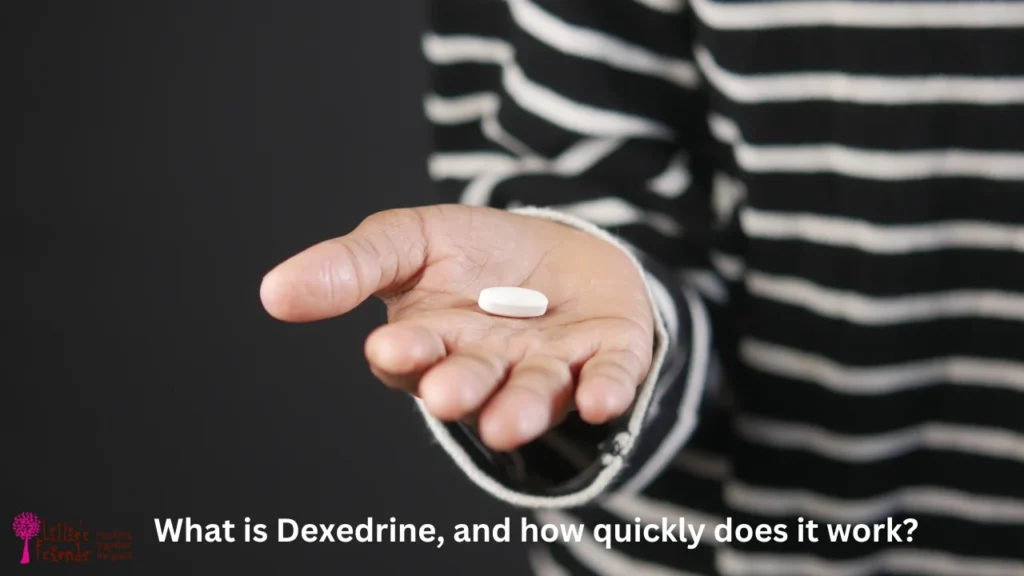
This medicine may treat both ADHD and narcolepsy , helping patients stay awake throughout the day. The daily dose for this kind of therapy varies according to an individual’s response, ranging from 5 mg to 60 mg.
Get personalized ADHD treatment with Mental Root, tailored to your unique needs by licensed healthcare professionals.
Book an appointmentDoctors recommend that ADHD patients take short-acting pills twice to three times each day. They are effective for four to six hours. For the greatest outcomes, patients should use the tables at the same time every day.
In contrast, the Dexedrine dose for long-acting pills is once daily, ideally in the morning. This medicine has a time-release formulation that ensures a consistent dose throughout the day (effective for 12 hours). ADHD patients should avoid taking this medicine in the evening since it might make sleeping difficult.
Long-acting pills are available in 5 mg, 10 mg, and 15 mg, but short-acting tablets are available only in 5 mg. Patients should remember to follow their Dexedrine medication instructions precisely. Most physicians start people with ADD on the lowest dose of Dexedrine and progressively increase it.
Prolonged use of Dexedrine for ADHD in adults may result in tolerance to the medicine. Patients should analyze how well their doses manage symptoms and plan frequent visits with their physicians to determine the best course of action.
While Dexedrine is effective for ADHD therapy, it may not be appropriate for those who:
Given that amphetamines might raise blood pressure, it is always a good idea to inform your doctor about any family history of cardiac problems. During therapy, the doctor will check vital signs to guarantee the patients’ safety.
Female patients should stay in contact with their physicians, particularly if they are pregnant, breastfeeding, or thinking about becoming pregnant. Breastfeeding while taking Dexedrine may not be recommended since Dexedrine might impact the child.
Typically, most people encounter few adverse effects when using Dexedrine. It is crucial to be aware of them. Common ones include:
Other side effects that may need medical care include:
Doctors may advise patients to halt their medication regularly to check ADHD symptoms throughout therapy. Typically, the doctor will assess weight, blood pressure, and any serious adverse effects of the medicine. If a patient has any severe issues, they must quit therapy.
However, physicians frequently urge patients who have seizures or severe adverse reactions to discontinue their medicine. Additionally, anybody who has thoughts of self-harm while on Dexedrine should seek immediate medical assistance.
Always follow your doctor’s treatment plan. Our team is here to answer your questions and adjust your care as needed.
Book an appointmentDexedrine and Adderall are stimulant drugs that are effective for treating ADHD. Both include variations of amphetamine, a synthetic chemical that stimulates the central nervous system.
It is vital to note that this chemical exists in two active forms: levo(l)-amphetamine and dextro(d)-amphetamine. Dexedrine contains d-amphetamine, while Adderall has a 3:1 ratio of d-amphetamine and l-amphetamine.
D-amphetamine is considered the more potent active form, implying that Dexedrine may be stronger and provide quicker effects than other ADHD medications. People who want to feel high might misuse Dexedrine tablets because of their fast stimulant effects.
Adderall, like Dexedrine, is available in both short-acting pills and extended-release capsules (Adderall XR). However, Adderall is available in a wider range of doses (5, 10, 15, 20, 30 mg) than Dexedrine. Dexedrine is about 25% stronger than Adderall; hence, the following formula may be used to convert an Adderall dosage to Dexedrine.
Dexedrine dosage equals Adderall dose multiplied by 0.75.
However, any dose adjustment or drug switch should be done under the guidance of an experienced ADHD specialist.
Both Dexedrine and Adderall have a half-life of roughly six hours and reach maximal concentration in the bloodstream within one to three hours. It implies that their short-acting medicines must be taken numerous times throughout the day to keep ADHD symptoms under control.
The FDA classified these substances as Schedule II pharmaceuticals, which means that patients may misuse or become addicted to them. Furthermore, they often have comparable side effects. Research suggests that Dexedrine is more effective in the afternoon, whereas Adderall is better suited for morning administration.
While this guide provides factual information about the Dexedrine prescription, it should not be used in place of a doctor’s consultation. Working together with a prescriber ensures that patients adopt a comprehensive approach to treating ADHD.