A team of experts wrote and checked the facts in this article, which is based on scientific evidence. Our experts work hard to be fair, objective, and honest, and they present both sides of the issue.
You might be getting up too early, but you can’t fall back asleep. They mostly feel exhausted when they wake up, no matter how many hours they slept.
Insomnia not only makes you tired and moody, but it also affects your overall health and work performance. To stop severe insomnia from getting worse and affecting your mental and physical health, learn more about it and how to deal with it.
Start insomnia treatment today to reduce the risks of sleep deprivation and improve your overall well-being.
Sleep disturbance may manifest as a transient issue that fluctuates or as a chronic condition without alleviation. So, depending on how long the symptoms last, insomnia can be either acute or chronic.
People sometimes have acute insomnia, which is also called short-term sleep deprivation. It can last for days or weeks after a traumatic event or other stressor. Chronic insomnia, on the other hand, is diagnosed when the symptoms happen at least three times a week and last for three months or more. It can happen on its own, but it can also be caused by long-term illnesses or taking medication for a long time.
People with insomnia have sleepless nights where they toss and turn and wake up several times. This can happen for a short time or a long time. All of this can be bad for your health and make you more likely to get diabetes, high blood pressure, and obesity.+
What Are the Symptoms of Insomnia?
The signs of insomnia can be different for each person, but the disorder is usually marked by:
Having trouble falling asleep
Getting up earlier than planned
Getting up several times during the night
If you have chronic insomnia, you may also experience the following:
Getting up makes me tired and cranky.
Being sleepy during the day
More mistakes at work and more accidents
Having trouble focusing and paying attention
More likely to forget things
Feelings of worry, sadness, and anger
Always being worried about sleep
How Common Is Insomnia?
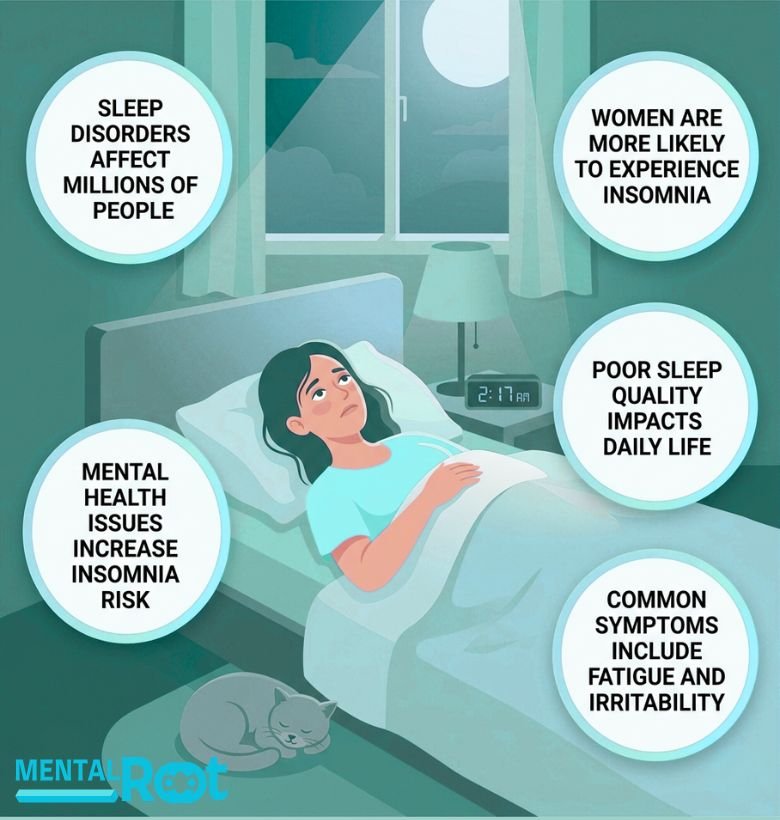
Sleep disorders are very common, affecting up to 70 million Americans every year. The American Academy of Sleep Medicine says that insomnia is the most common sleep disorder. About 30% of adults have short-term insomnia, and 10% of the general population may end up with long-term insomnia. As many as 40% of people say they accidentally fall asleep during the day.
If insomnia symptoms begin to affect your daily life or become difficult to manage, it’s important to consult a sleep specialist.
It is hard to get things done during the day if you can’t sleep. If you notice that you’re making more mistakes than usual or that your performance is getting worse because you aren’t getting enough sleep, get help from a professional. This will help you figure out what is really wrong and make a plan for how to fix it. After looking into your possible signs of insomnia, your doctor may send you to a sleep center for more tests.
Why do people get insomnia?
Insomnia can be the main problem, but most of the time it’s caused by other medical, psychiatric, or other problems. Life events that are stressful may also cause insomnia. For example, losing a loved one quickly can make it hard to sleep for a long time. When insomnia is caused by something else, treating the main problem might be enough to get rid of the sleep disorder.
Some common reasons why people have insomnia are
Stress. One of the main reasons people can’t sleep is stress. Stress from everyday things like work, school, family, health, or money issues can keep your mind active even at night, making it hard to fall asleep. Bigger events, like losing a job or getting divorced, can be even worse and cause severe insomnia.
Not getting enough sleep. Using phones or computers in bed, having an irregular bedtime schedule, sleeping in an uncomfortable place, or doing stimulating things right before bed can all mess up your sleep cycle and lead to insomnia. You might also have trouble sleeping if you eat or watch TV in bed.
Plan for each day. The internal clock that controls when you sleep and wake up is called the circadian rhythm. Working late at night, getting up early, or switching shifts often can throw off this internal clock, which can lead to insomnia. Being in a different time zone for a long time can also mess up your circadian rhythm.
A lot of food before bed. Being around it can make you physically uncomfortable and keep you from sleeping. People who eat too much often get heartburn, which can keep them awake for hours.
Health problems and other things that can cause insomnia
People who have certain long-term illnesses or take certain medications may experience insomnia. Still, the sleep disorder may not go away even after the underlying health problem is treated. Some conditions and drugs that often cause insomnia are
Mental health problems. People with psychotic disorders, bipolar disorder, depression, or anxiety often have trouble sleeping because they mess up their sleep cycles. People who have mania often don’t need to sleep as much, which can be dangerous. Mental health problems and insomnia disorders often go hand in hand. This means that mental health problems can cause insomnia and vice versa.
Long-term health problems. People who have terminal illnesses like cancer or long-term illnesses like Alzheimer’s, Parkinson’s, high blood pressure, chronic pain syndrome, and asthma are more likely to have trouble sleeping.
The medicines. Some prescription and over-the-counter drugs may make it harder for you to fall or stay asleep, which can lead to insomnia. Some antidepressants, blood pressure medicines, and allergy pills are in this group.
Adrenalin. Stimulants, like nicotine, caffeine, and alcohol, make it hard to sleep, especially if you drink them before bed. These stimulants are found in large amounts in caffeinated drinks like cola and beverages like tea and coffee. Drinking them late at night can make it hard to fall asleep. Also, drinking stops you from falling deeper into sleep and wakes you up several times during the night.
Sleep disorders like restless leg syndrome and sleep apnea can also make it hard to sleep at night. Having restless leg syndrome makes you feel bad and makes you want to move your legs all the time while you’re in bed, which keeps you from falling asleep. Otherwise, sleep apnea, whether it’s obstructive or central, makes you stop breathing while you sleep, waking you up gasping for air. This could happen more than once and keep you from sleeping.
Get an online prescription for insomnia from a licensed provider and enjoy the restful sleep you deserve.
The body’s clock changes with age, which can cause sleep patterns to change. People often get tired early and go to sleep or wake up earlier than they want to. Less restful sleep comes with age, and even small changes in your environment can make it hard to sleep. Things that come with getting older that seem to make people in this age group lose their sleep are
Not as much activity. Older people tend to be less socially and physically active and like to take several naps a day. This might make it hard to sleep at night.
Health getting worse. Psychiatric disorders, arthritis, and back problems in older people often make it hard to sleep. As you get older, problems with your bladder or prostate may wake you up several times at night to go to the bathroom.
Several medicines. Older people are more likely to get sick and often take a lot of medicines, which can make it hard for them to sleep.
Risk Factors for Insomnia
A lot of people have trouble sleeping from time to time. But the following things can make you more likely to get long-term insomnia:
Gender. Women are more likely than men to have trouble sleeping. Changes in hormones that happen during menstruation, pregnancy, and menopause are the main reasons why women have trouble sleeping.
Age. People over 60 often have trouble sleeping because their health and activity levels have changed.
Problems with health. People who already have mental or physical health problems are more likely to develop insomnia and other sleep disorders.
A lot of stress. Things that are stressful, like the death of a loved one or a divorce, can make it hard to sleep.
Not a regular schedule. Changing work shifts often or traveling through several time zones can throw off your sleep-wake cycle.
What Risks Are Increased by Insomnia
Sleep is very important for your overall and functional health. As a result, people who have insomnia often say they have a lower quality of life. Among the other problems are the following:
More likely to get and worsen chronic diseases like heart failure, diabetes, and high blood pressure.
Not being able to concentrate well leads to poor work and school performance.
More mistakes and accidents are likely to happen.
The growth of mental illnesses like anxiety and depression.
How to Stop Insomnia
Good sleep hygiene can help you sleep better and keep you from getting insomnia. Some of these are:
Setting regular times to go to bed and wake up, even on the weekends.
Keeping busy during the day.
Checking to see if prescription and over-the-counter drugs cause insomnia and talking to your doctor about your worries will help them choose the best drug for you.
Stay away from drinks with caffeine and alcohol late at night.
Not taking naps.
Eating small meals before going to sleep.
Setting up a comfortable place to sleep.
Take Control of Insomnia
Have you ever wondered, “Why can’t I sleep at night?” If you keep asking the same question, it’s a good idea to see a doctor to see if you have insomnia.
Not being able to sleep is more than just a little annoying. Insomnia can have negative effects on your mental and emotional health as well as your physical health. If you have trouble sleeping, make sure to see a doctor or other health professional. In addition to therapy and medications, you can make changes to your behavior and lifestyle with the help of a professional. These changes will help you sleep better and have more restful nights. Get in touch with Mental Root to find the best way to treat your insomnia.




 10 min read